email tipscopywriting
Writing Email Subject Lines That Get Opened
A good subject line is specific, short and honest. Practical rules for writing subject lines people open, with examples and a case for personalising them per recipient.
By Outbox Team · · 2 min read

The subject line decides whether your email is read at all. People scan their inbox in seconds, so you have very little time to earn a click. These rules work for everything from client updates to outreach.
Be specific
A specific subject tells the reader exactly what is inside, which builds trust.
- Weak: "Update"
- Better: "Your October invoice is ready"
Keep it short
Many inboxes cut subjects off around 40 to 60 characters, and mobile screens cut them sooner. Put the important words first so they survive the trim.
Match the subject to the message
A subject that promises something the email does not deliver might win one open, but it costs you trust and increases spam reports. The best subject is an honest summary.
Avoid spammy habits
- ALL CAPS and repeated punctuation ("FREE!!!");
- vague urgency like "Act now";
- fake "Re:" or "Fwd:" prefixes.
These also raise the chance of landing in spam.
Add a reason to open
Give the reader a benefit, a deadline that is real, or a question they care about:
- "Can we move Thursday's call to 3 pm?"
- "Three changes to your booking"
- "Draft for review before Friday"
Personalise where it matters
A name, a company or a detail from your last conversation makes a message feel written for one person, because it is. Compare "Quick question" with "Quick question about Maya's proposal".
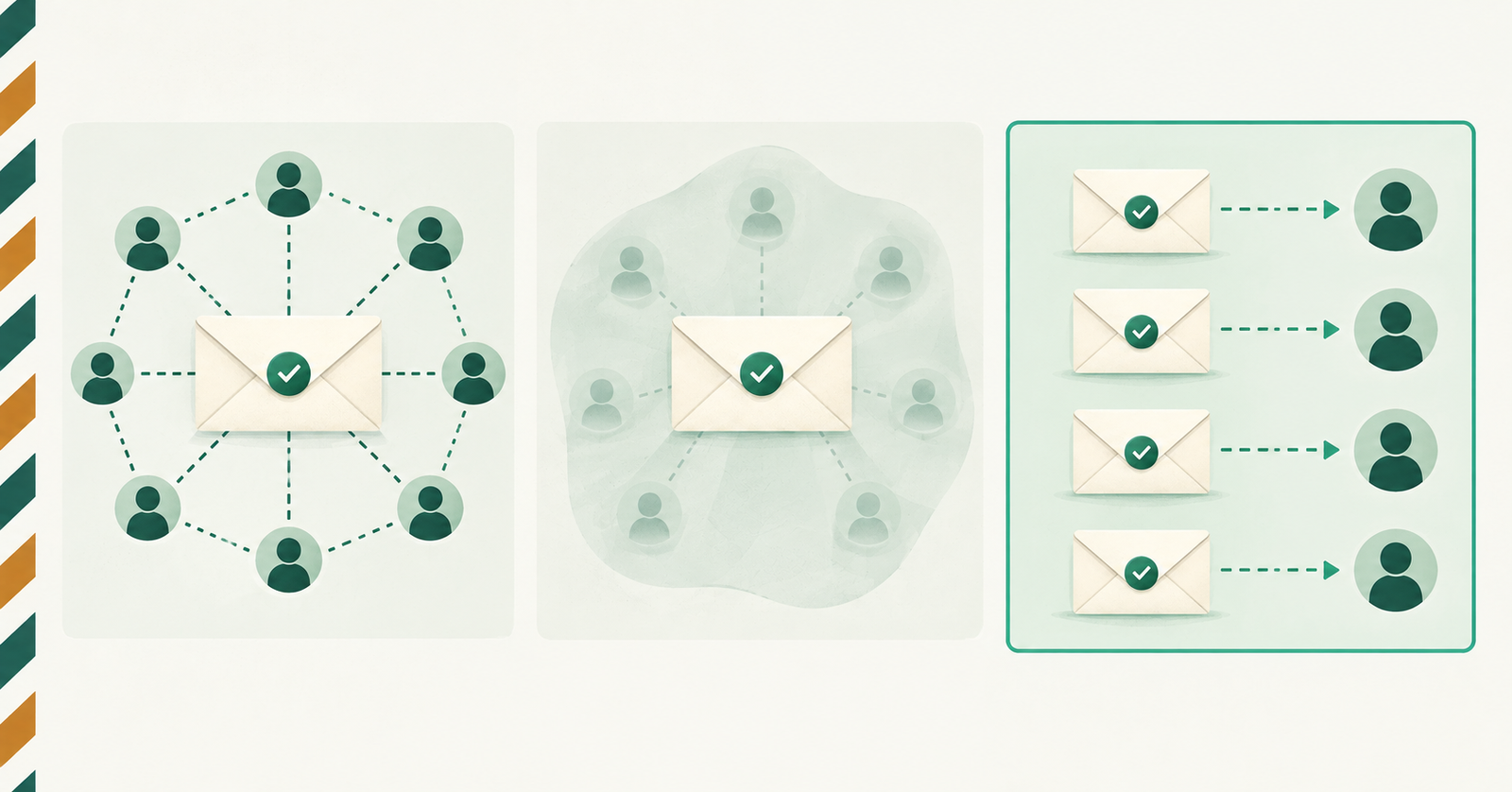
This is where sending individual emails helps. When each person gets their own message, each one can have its own subject. In Outbox you can switch off "Same subject for all" and write a different subject for every recipient, so a batch of invoices, introductions or follow-ups still feels personal.
Test and learn
Keep a note of which subjects get replies and reuse the patterns. Small, honest changes beat clever tricks every time.